
newsletter 06/16/25
ICAP In and Out of the Courts
Back in the Supreme Court
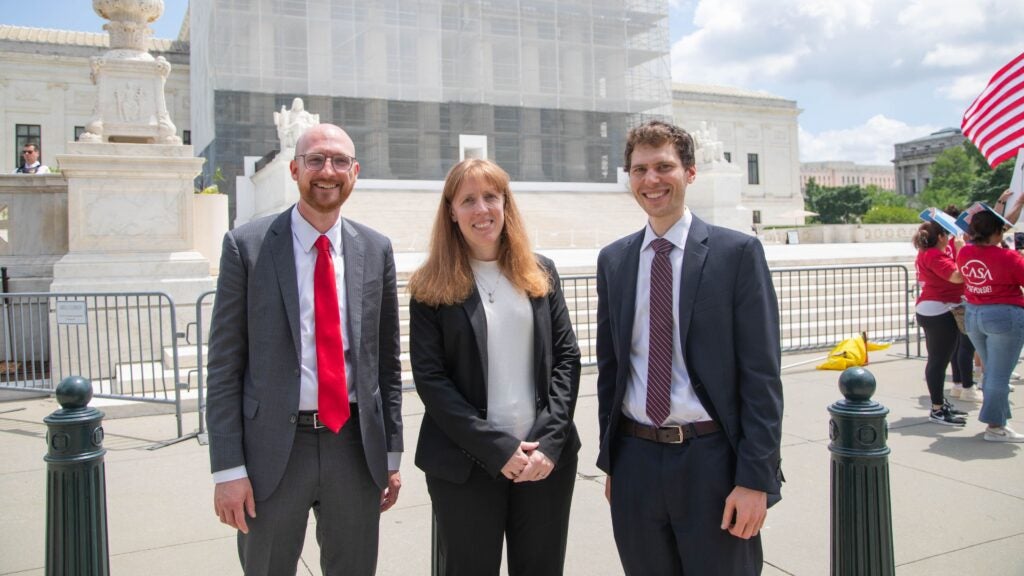
ICAP’s Supreme Court Director Kelsi Corkran had the last argument of the Supreme Court’s term – not on its regular docket, but on the emergency docket. The Court heard argument after the Trump administration sought to narrow the nationwide preliminary injunction ICAP obtained earlier this year barring the president’s executive order limiting birthright citizenship. A federal district court judge enjoined the executive order nationwide back in February, concluding that the executive order was in violation of the plain text of the 14th Amendment, binding Supreme Court precedent, and historical practice. That substantive legal conclusion hasn’t yet come before the Supreme Court, and although we must wait for the justices to rule on whether nationwide injunctions are permissible, our plaintiffs remain protected and many have given birth to children who are U.S. citizens because of our injunction. Meanwhile, we’re defending the actual substance of the district court’s constitutional ruling in the Fourth Circuit Court of Appeals, with argument scheduled in September. The case is CASA v. Trump.
Standing up for Afghans and Camaroonians
We’re also proud to represent CASA in another case where, on behalf of its impacted members, we are challenging U.S. Secretary of Homeland Security Kristi Noem’s unlawful attempt to terminate the Temporary Protected Status (TPS) designations for Afghanistan and Cameroon. In 2022, individuals from Afghanistan and Cameroon received TPS in response to years of armed conflicts, hunger, and human rights abuses in their countries. This protective status was later extended, allowing thousands of Afghans and Cameroonians to lawfully live and work in the United States for the last three years. We have seen widespread support to continue this status, including from veterans. We argue that the attempted termination failed to comply with the required procedures outlined in the TPS statute and is, at least in part, motivated by racial animus.
Meanwhile, our ongoing litigation hasn’t slowed down. Among other things, we’ve filed for summary judgment in our litigation against DOGE’s attempted dismantling of the Inter-American Foundation; have continued our challenge to DHS’s decision to rescind its policy of not conducting ICE raids at places of worship; and have presented two oral arguments in the lower courts: first, in defense of an Indiana sheriff’s policy to protect his community by not voluntarily cooperating with ICE beyond what is required by law; and, second, in support of pretrial detainees in Prince George’s County, Maryland, who challenge their illegal detention for weeks, and sometimes months, while waiting for their trials.
Providing Expertise about Military Authorities and Rule of Law
After watching Los Angelenos protest widespread ICE raids in their communities late last week, Americans went to bed on June 7 just as we were learning that the president had issued a memorandum federalizing the National Guard and authorizing the deployment of regular Armed Forces to protect federal officials and federal property during protests anywhere in the country. It started with 2,000 California National Guard members being sent to Los Angeles–over the governor’s objection–on June 8, then expanded on June 9 to 2,000 more California National Guard members and 700 active duty Marines being deployed to the area. The presidential memorandum claimed authority to federalize the National Guard under a provision of the U.S. Code that has never been used this way before. The memorandum asserts that protests or acts of violence in response to ICE raids “constitute a form of rebellion against the authority of the United States”—a prerequisite to federalizing National Guard troops under the statute—and purports to apply where protests “are occurring or are likely to occur.” A federal district judge disagreed that the situation in Los Angeles is “rebellion,” and ordered the National Guard back under the governor’s control, but his ruling has been temporarily stayed while the Ninth Circuit takes a look.
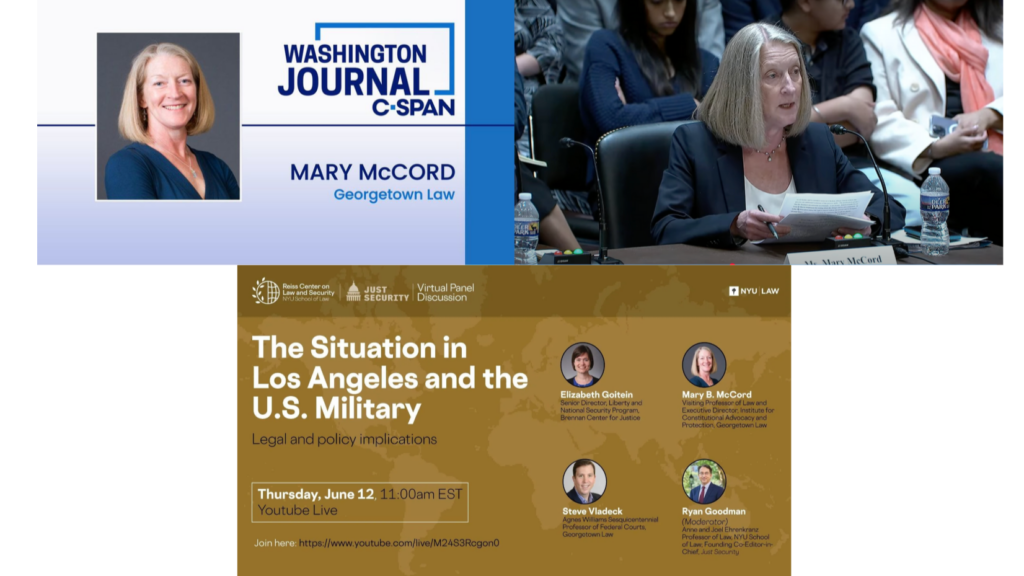
If this raises questions for you, such as “can the president do that?” you’re not alone! You can watch ICAP Executive Director Mary McCord explain the legal issues on CSPAN’s Washington Journal, at a panel discussion sponsored by the Reiss Center on Law and National Security at NYU, on the Main Justice podcast, and during Mary’s testimony at a Senate spotlight forum on the administration’s mass deportation policy and its impacts on constitutional rights. We’ll continue to watch this fast-moving case closely and help keep you and the public informed.
Mary also wrote about the importance of due process and the rule of law in an op-ed about what all nine Supreme Court justices agree on—that immigration detainees are entitled to notice and an opportunity to contest their removal from the country before they are removed. And she joined NPR’s 1A to talk about why the Trump administration is losing so many cases in court.
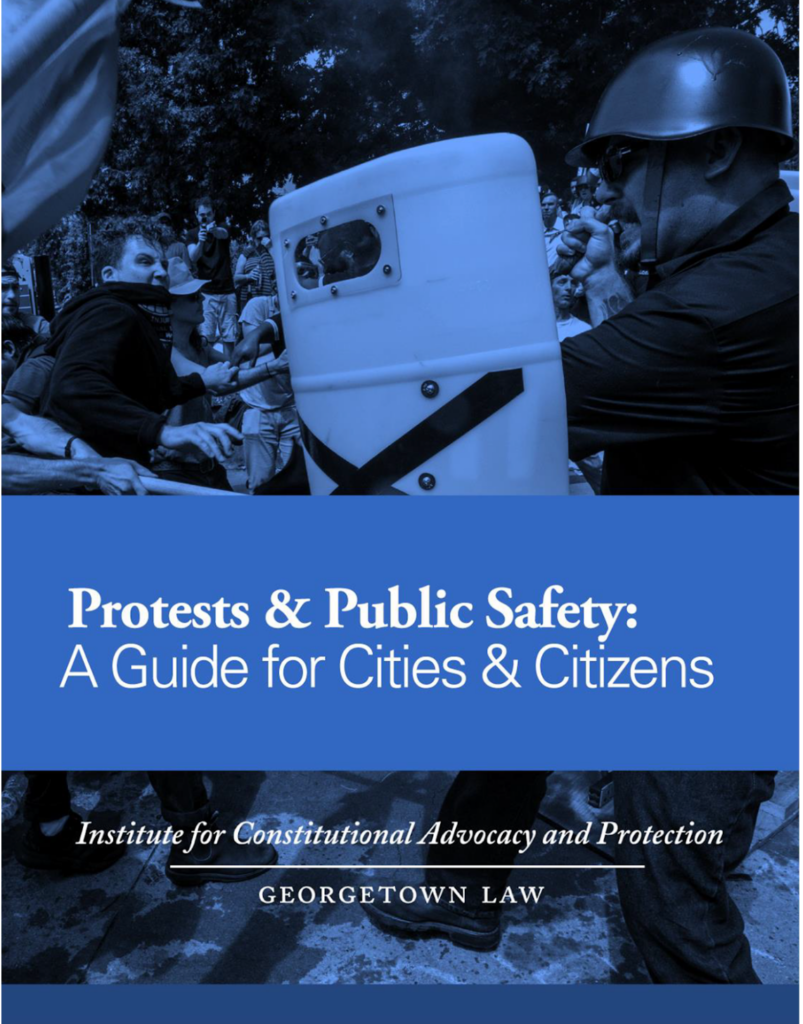
Finally, given the rising number of protests occurring across the country, we have also seen an uptick in use of our Constitutional Protest Guide. This guide provides a comprehensive toolkit of legal analysis and best practices to protect public safety while preserving constitutional rights at protests and public events. We’ve included guidance for a wide range of stakeholders and appreciate that many individuals across sectors have found use in this guide.
Behind the scenes
For all the public work you read about in this newsletter every other month, there’s a nearly equal amount of work our talented team is doing behind the scenes. Whether consulting with state, local, and federal officials; non-profits and clergy organizations; other litigators and academics; or impacted communities, ICAP’s attorneys are regularly called on for their expertise in standing up for constitutional rights. We take every call, nights and weekends included, and we’re privileged to be able to do this at no charge because of our committed group of supporters like you.