
newsletter 12/14/23
Ending the Year with Accountability
Institute for Constitutional Advocacy and Protection
GEORGETOWN LAW
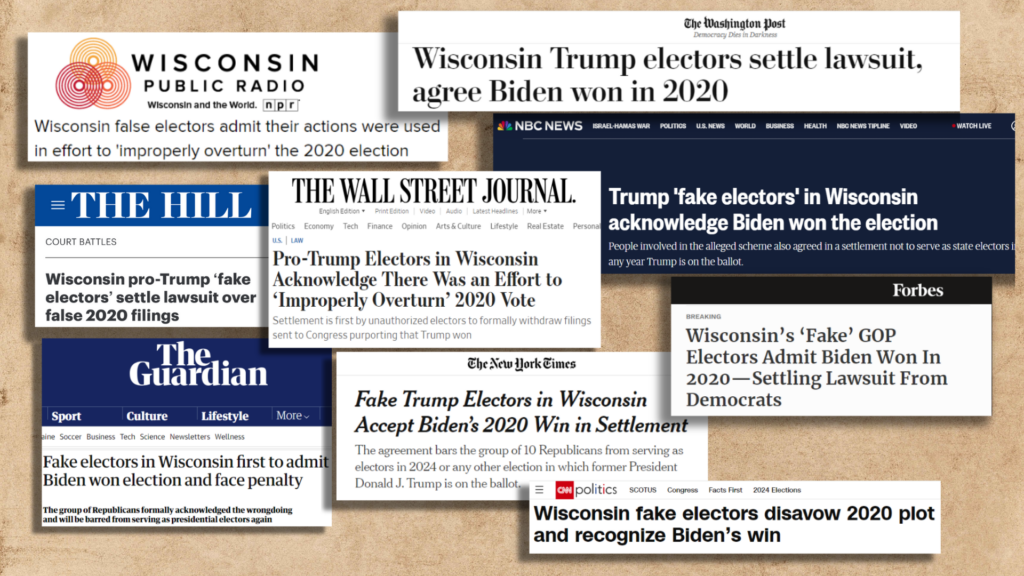
We’re ending the year big with the resolution of our case against the fraudulent electors in Wisconsin, brought on behalf of two legitimate Biden electors and a Wisconsin voter. As part of the public settlement, all 10 individuals who purported to cast their Electoral College votes for Donald J. Trump and Michael R. Pence and falsely signed papers certifying that they were Wisconsin’s lawful presidential electors have publicly stated that their votes—cast at the request of the Trump Campaign and the Republican Party of Wisconsin—were used as part of an effort to overturn the results of the 2020 election. They have agreed not to serve as electors in the next election and not to sign such a certification in any future election in which are not the duly certified electors under state law. They also have officially requested that the documents they signed be withdrawn and disregarded.
Seeking accountability, we and our Wisconsin co-counsel brought this case long before any criminal prosecutions were underway against those who participated in the nationwide fraudulent elector scheme. As part of the settlement, text messages and emails among the electors and others are now public, bringing transparency to how the Wisconsin portion of the scheme was planned and carried out. Our case against Trump campaign attorney James Troupis, and architect of the scheme Kenneth Chesebro, remains ongoing. Read our press release here, and take a look at the press coverage of the settlement here!
ICAP has also been busy in the Supreme Court.
Civil Rights “Tester” Standing Preserved: In just the short time since our last email, the Supreme Court issued a favorable decision in Acheson Hotels v. Laufer, which ICAP’s Supreme Court Director Kelsi Brown Corkran argued in October. The Court had taken the case to determine whether our client, who lost her physical mobility due to multiple sclerosis in her 30s, had legal standing as a “tester” to challenge a hotel’s unlawful failure to provide accessibility information on its website. As we had requested in our briefing, the Court dismissed the case without deciding the standing issue, thus preserving tester standing for civil rights litigants as permitted under existing law.
Accountability for Police Brutality: ICAP also successfully preserved an appellate court victory for the family of a man fatally shot by a police officer in front of his toddler daughter after a baseless traffic stop. After the Supreme Court denied review of the appellate court’s refusal to give the officer immunity from suit, the city settled the case with our client, an important step in holding accountable those who abuse their authority and destroy trust between law enforcement and the communities they serve.
Adding National Security Voices to Disputes over Social Media Content Moderation: ICAP is proud to have represented more than two dozen national security experts, including former military leaders and high-level intelligence officials, in explaining to the Supreme Court the dangers of disinformation and extremist content posted on social media by foreign terrorist groups, foreign malign actors, and domestic violent extremists. We filed our brief in the Netchoice cases, which challenge Texas and Florida laws that would restrict the ability of social media platforms to take down dangerous content. As our signatories explained in the brief:
“[T]the use of social media platforms to radicalize, recruit, plot, and plan terrorist attacks is ubiquitous among foreign terrorist organizations and domestic extremists and can be directly traced to acts of terrorism and violence in the United States. . . . Our nation’s security depends upon social media platforms to be responsible corporate citizens who seek out dangerous content posted by malign actors and remove it or take other measures to stop its spread.”
We’ve been busy in other courts too!
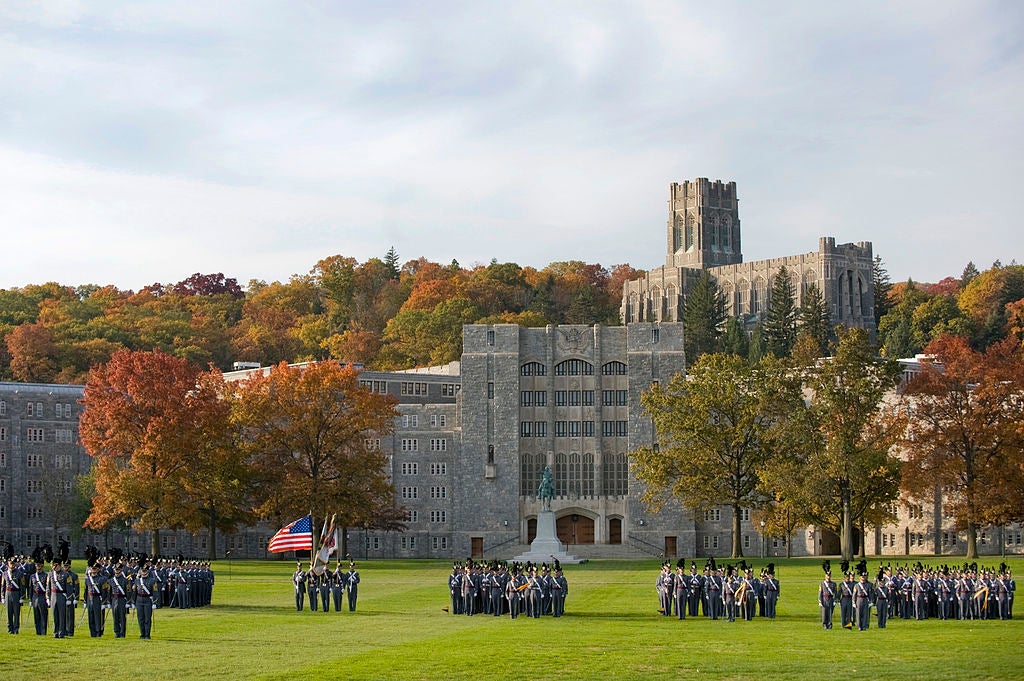
We were honored to represent over 100 current and former U.S. Army officers and West Point graduates in supporting West Point’s race-conscious admissions policy, now under challenge by the same plaintiff organization that successfully challenged similar policies at Harvard University and the University of North Carolina in the Supreme Court. The brief explains how a diverse officer corps is necessary to create “a more cohesive, more competent, and ultimately more lethal fighting force.”
We’re continuing to litigate against unconstitutional pretrial detention policies in the criminal legal system; stand up for student school board members in Howard County, Maryland; and help those facing eviction get legal advice in South Carolina, among many other cases.
But that’s not all!
Our work combating political violence and anti-democracy efforts has kept us busy consulting with local, state, and federal public officials and community leaders seeking help in protecting public safety while also respecting constitutional rights. Our new guidance for universities and colleges facing heightened protest activity related to the Hamas-Israel war has generated follow-up requests for First Amendment training for campus law enforcement. And the Department of Justice looked to ICAP to help lead its first-ever summit on domestic violent extremism earlier this month.
As we look back on the past year, we are grateful for the opportunity to stand up for our shared values, and we are thankful for your support, which makes this work possible. Please consider ICAP in your end-of-year giving plans.
Keep up with ICAP on Twitter via @GeorgetownICAP; and suggest what we should take on next via reachICAP@georgetown.edu.With thanks for your continued support, The ICAP Team.