
newsletter 12/23/24
Reflecting on 2024 + Preparing to Meet the Moment
What a year it’s been for ICAP!
In 2024 alone, our small but mighty team represented parties in state and federal courts in over two dozen cases. We filed multiple affirmative cases to protect constitutional rights, and in other cases stepped in to defend those whose rights were under attack. We worked to make or preserve favorable constitutional law in the appellate courts and U.S. Supreme Court in nearly 10 cases. We helped members of Congress craft legislation that would provide civil remedies to shut down unlawful paramilitary activity. And we assisted scores of local, state, and federal officials to ensure a fair election free of political violence.
Since our last newsletter:
Protecting Democracy
In Ohio, after a masterful argument by Supreme Court Director Kelsi Brown Corkan before the full Sixth Circuit in our First Amendment challenge to state Attorney General Dave Yost’s repeated blockage of a citizens’ ballot initiative, Yost finally gave his approval, clearing the way for our clients to circulate the petition statewide with the goal of placing it on the November 2025 ballot.
In Texas, we successfully delayed the harassing document requests served by state Attorney General Ken Paxton on a Latino civic engagement non-profit, Jolt Initiative, aimed at intimidating the organization from continuing its voter registration work, while our constitutional challenge to his requests continues.
On Election Day, as we did in 2020, ICAP attorneys (and some of our students!) worked with the Election Protection hotline to monitor and respond to instances of armed intimidation or political violence at the polls. Happily, there was little to respond to, in part due to the extensive consultations and trainings that ICAP has provided to local and state election officials, law enforcement, and civic organizations since the last presidential election, as well as public education efforts such as Executive Director Mary McCord’s discussion of political violence at the Eradicate Hate Summit in Pittsburgh in October.
Post-election, we’ve been sounding the alarm about the threat to the rule of law posed by some of President-elect Donald Trump’s promised actions. Among other public speaking, Mary joined Lawfare Live to discuss serious national security concerns related to some of Trump’s announced appointees, and Mary also joined ICAP Faculty Director Neal Katyal, along with Andrew Weissmann, at The New York Historical to discuss “Trump, the Law, and the 2024 Election.”
Vindicating Constitutional Rights
We are thrilled that our client Roxanne Torres’s civil rights suit for excessive police force has finally — after four rounds of district court briefing, two appeals to the Tenth Circuit, and a trip to the U.S. Supreme Court – ended in a favorable settlement. Ms. Torres was shot in the back by police 10 years ago while driving away after an early-morning encounter in which they were looking for someone else.
ICAP is proud to be defending on appeal the preliminary injunction we obtained in Georgia barring a new state law that would have imposed severe restrictions on the payment of charitable cash bail. Our brief in the Eleventh Circuit asserting the First Amendment rights of charitable bail funds is supported by elected prosecutors, who filed their own amicus, or “friend of the court,” brief.ICAP also continues its constitutional challenge to the pretrial detention practice in Prince George’s County, Maryland, by which judges defer detention decisions to the county’s corrections department. Having now fully briefed our case on appeal, we look forward to argument in the Fourth Circuit in the new year.
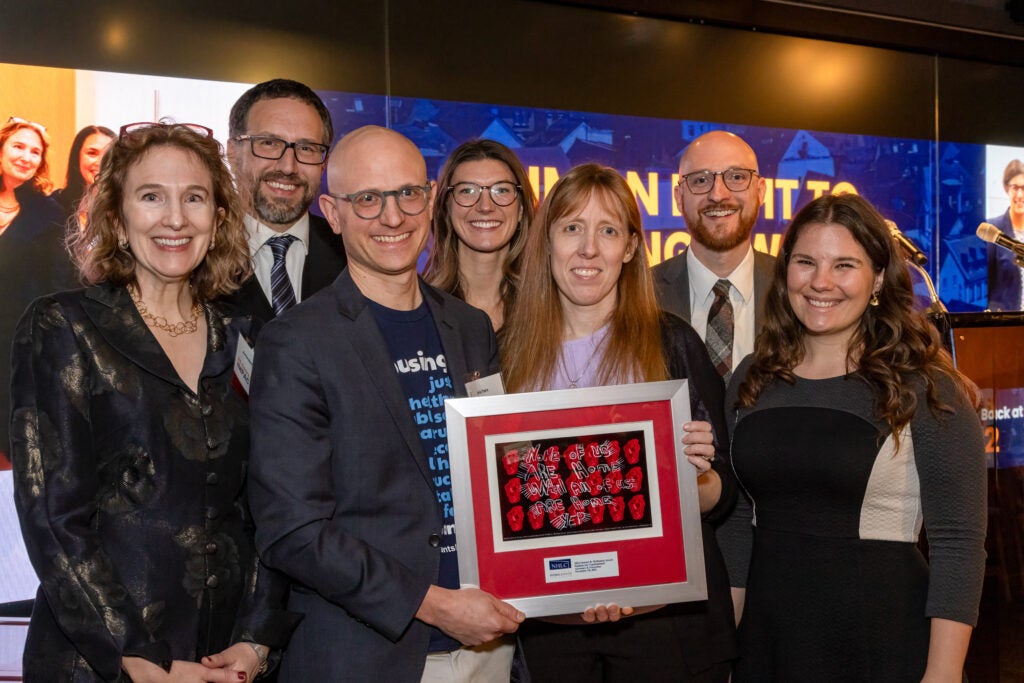
ICAP RecognitionThe ICAP team was honored to have been recognized at the National Homelessness Law Center’s annual Human Right to Housing Awards for our work in the case of Grants Pass v. Johnson (pictured above). ICAP, alongside the Oregon Law Center and the Oregon Justice Resource Center, accepted the 2024 Stewart B. McKinney Award for outstanding leadership in the movement to end homelessness as a result of ICAP’s work.
2025 – Meeting the Moment
ICAP’s mission is to use strategic legal advocacy to protect constitutional rights and values while working to restore confidence in the integrity of our governmental institutions. We expect to face many challenges in fulfilling this mission during the upcoming presidential administration, and we want to let you know how we are preparing to meet the moment.
First, these challenges are not new to ICAP. Beginning in 2017, ICAP successfully litigated in response to federal government overreach in the areas of immigration, national security, and First Amendment rights. ICAP also responded to a threat not fully anticipated: political violence by unlawful private militias. Our groundbreaking case against white supremacist and private militia groups after Charlottesville’s Unite the Right rally in 2017 led to our well recognized national expertise in suing militias, educating the public that militias are not protected by the constitution, and working with local, state, and federal policy makers to beef up the laws against them.
As we enter 2025, we anticipate new challenges and opportunities to advocate in defense of constitutional rights. Among other things, we are preparing to address the potential misuse of military authorities, unconstitutional efforts to limit birthright citizenship, coercive restrictions on federal grants to states and localities, and the retaliatory targeting of political opponents. We are adding attorneys to our team to be sure we are prepared not only for litigation and public advocacy, but also to provide legal consultation behind the scenes.