
newsletter 03/07/23
Protecting constitutional rights and values at the federal, state, and local levels
Institute for Constitutional Advocacy and Protection
GEORGETOWN LAW
ICAP is off to a busy start in 2023!
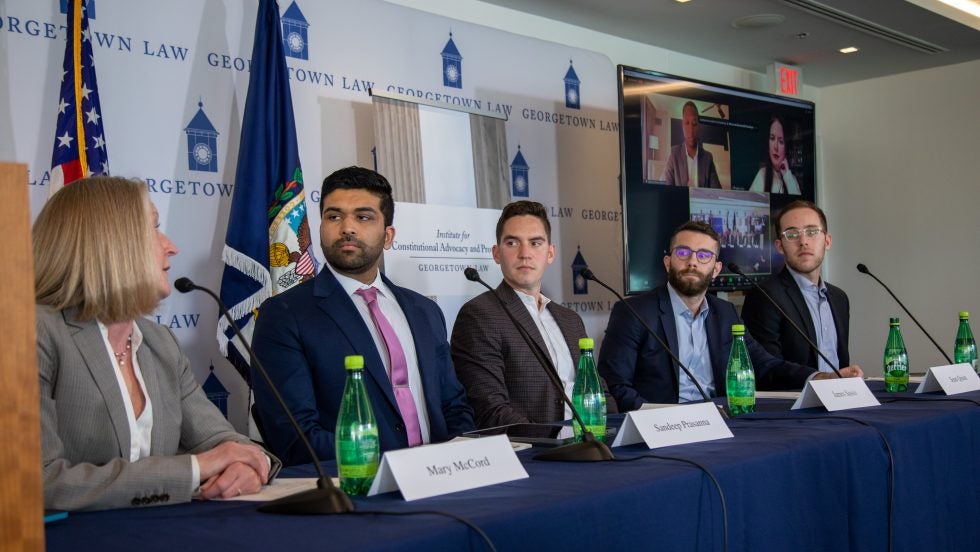
Continuing our work to shore up democracy in the face of political violence, on February 23, ICAP brought together six former investigators from the January 6 House Select Committee to discuss their work. They described how extremist paramilitary groups like the Oath Keepers and Proud Boys coalesced around conspiracy theories spread through social media, interacted directly with close advisors to former President Trump, and ultimately—along with thousands of other Americans—mobilized to attack the U.S. Capitol. View C-SPAN’s event coverage here. The event built on ICAP’s work to elevate the findings of the House Select Committee through articles and podcasts by ICAP executive director Mary McCord and policy counsel and former Select Committee investigative counsel Jacob Glick. Check them out here, here, here, and here, as well as MSNBC coverage here!
As more state and local leaders seek to take action against domestic violent extremism, ICAP published model state legislation to prohibit private paramilitary activity that threatens democratic processes and the constitutional rights of others. The model includes civil enforcement mechanisms for state officials and victims of vigilante actions to seek injunctive relief and damages. The model was the basis for legislation that has been introduced in Oregon and New Mexico, and ICAP has provided testimony in support of these bills and other similar measures in Vermont and Montana. ICAP also filed an amicus brief on behalf of the U.S. Conference of Mayors in support of an assault-weapons ban in Highland Park, Illinois, where a mass shooter killed seven people and wounded dozens more during a 4th of July parade in 2022.
ICAP also has been working to prevent other legislative initiatives that would weaken protections against political violence and the rule of law, arguing against a proposal to repeal Idaho’s anti-militia law and testifying against a since-defeated “constitutional sheriffs” proposal in Montana that would have required federal law enforcement to obtain the written permission of the local sheriff in order to enforce federal law.
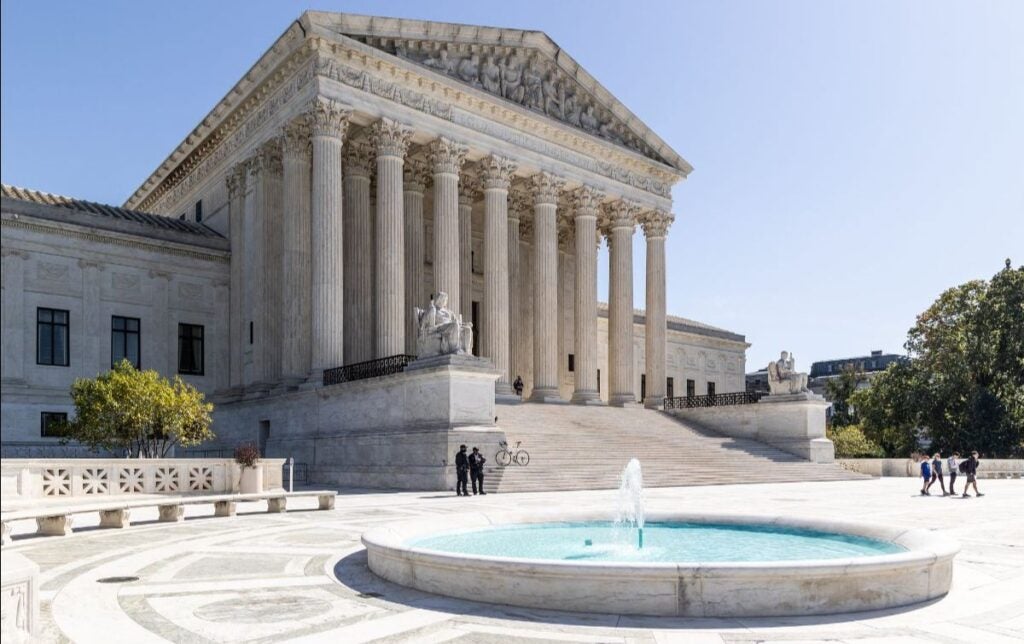
At the Supreme Court, ICAP continues its fight to preserve constitutional victories, filing a brief on behalf of a man with severe mental illness who was unlawfully imprisoned for six years after he was deemed incompetent to stand trial. The Fifth Circuit ruled that the detention violated his constitutional rights and we are opposing the sheriffs’ petition asking the Supreme Court to reverse that ruling. We also have several other cases in the SCOTUS pipeline involving immigration-related rights — stay tuned!
ICAP continues to represent a woman shot in the back while fleeing police officers she thought were carjackers after Supreme Court Director Kelsi Brown Corkran’s important civil rights victory on her behalf in the Supreme Court in 2021. Despite the Supreme Court’s ruling that the Fourth Amendment applies to police excessive force whether the victim succumbs to the force or is able to escape, the district court ruled against Ms. Torres when the case came back to it after the Supreme Court’s decision. Kelsi and the ICAP team jumped back in, successfully appealing to the Tenth Circuit, which reversed that ruling and ordered the district court to try again on the question of whether the police officers violated clearly established Fourth Amendment rights when they shot her.
Also in the federal courts of appeals, ICAP represents the mother of a young man shot and killed by police while he was in a mental health crisis, seeking to preserve the judgment of the court below that the police officer was not entitled to qualified immunity. ICAP also represents a class of homeless residents of the City of Grants Pass, Oregon, opposing rehearing en banc of the Ninth Circuit’s determination that the City violated the Eighth Amendment when it decided to push its homeless population into neighboring jurisdictions by punishing involuntarily homeless people for resting anywhere at any time on public property within city limits.
ICAP has also been busy in the trial courts. In our case against the fraudulent electors in Wisconsin, we won a remand of the case back to the state court where we brought it after the defendants sought to have the case heard in federal court. In our challenge to Prince George’s County, Maryland’s unconstitutional pretrial detention system, by which judges defer detention decisions to the local jailors, a federal judge allowed our case for declaratory and injunctive relief to go forward after denying motions to dismiss those claims. In our continued efforts to provide access to criminal court proceedings and following our court victory last year invalidating Maryland’s ban on broadcasting recordings of criminal case proceedings, even if those recordings were created by the government, we weighed in against a new effort to change the rules and block public access to such recordings in the first instance. The Maryland Supreme Court has since referred the proposed rule back to the committee. Relatedly, ICAP sent a letter to Maryland state legislators urging them to pass legislation expanding public access to state criminal court proceedings and, in doing so, ensure Maryland’s criminal justice system is transparent and open to scrutiny from the communities it is meant to serve.
Keep up with ICAP on Twitter via @GeorgetownICAP; and suggest what we should take on next via reachICAP@georgetown.edu.With thanks for your continued support, The ICAP Team.