
newsletter 04/22/25
Litigating and Advocating for the Rule of Law
ICAP in the courts
Our litigation pace is at its fastest ever, and isn’t slowing down. Since the start of 2025, ICAP has filed dozens of briefs at every level of the courts–from complaints and preliminary injunction motions in new cases to appellate briefs and Supreme Court stay oppositions in existing cases.
What’s happening in the birthright citizenship cases?
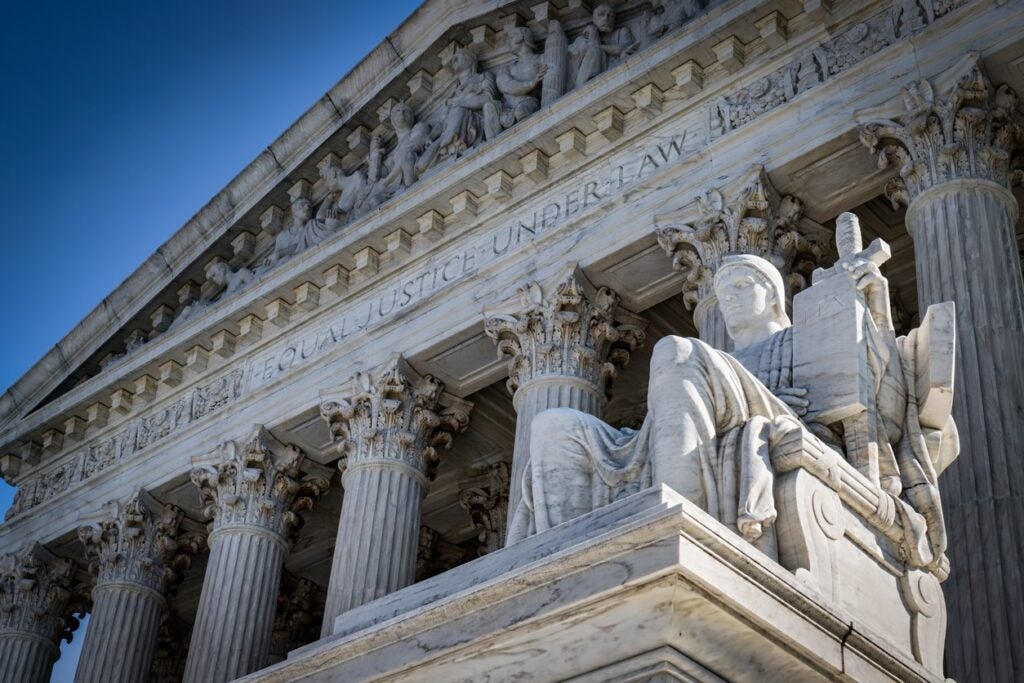
Late last week we learned that the Supreme Court has scheduled oral argument in our birthright citizenship case for May 15. But the argument isn’t about what you might think. As you’ll recall, we won a nationwide preliminary injunction barring the president’s Executive Order that seeks to reinterpret the 14th Amendment and deny citizenship to children who do not have at least one parent who is a citizen or lawful permanent resident. In addition to appealing that decision on the merits (meaning, on the substantive constitutional and statutory questions), the government also sought to stay the nationwide part of the injunction pending appeal. When they lost their stay motion in the lower courts, they took it to the Supreme Court as an emergency motion. On May 15, we’ll be arguing that there’s no emergency that would warrant upsetting well over 100 years of birthright citizenship and, in any event, a nationwide injunction is necessary to provide complete relief in this case.
We’ll have much more to say about this in the weeks and months to come. While we’re preparing to argue about emergencies and nationwide injunctions in the Supreme Court, we’re also filing our briefs in the Fourth Circuit defending the district court’s opinion on the merits. That court rightly held that the Executive Order conflicts with the plain language of the 14th Amendment, contradicts 125-year-old Supreme Court precedent, and runs counter to the country’s history of recognizing citizenship by birth. Our case, on behalf of pregnant mothers and the members of two immigrant rights organizations, has already protected the citizenship of many babies who would have otherwise been denied it if the Executive Order hadn’t been enjoined.
In other litigation . . .
ICAP is suing to protect the Inter-American Foundation (IAF) against DOGE’s effort to dismantle it as “unnecessary.” The grantees of IAF work to strengthen the stability of communities by addressing a wide range of issues including reducing violence against women in Peru, promoting sustainable agriculture in El Salvador, reducing gang violence in Guatemala and Honduras, and other important work.
We’re also continuing to litigate to protect the First Amendment rights of Ohioans seeking to get a proposed state constitutional amendment on the ballot without having to get their summary description of the ballot initiative approved by state Attorney General Dave Yost, who has disapproved their summary seven times. After a federal court enjoined the approval requirement for violating the plaintiffs’ right to engage in political speech, Yost sought to stay the injunction in both the federal appellate court, which rejected it, and in the Supreme Court, where we filed our opposition last week.
The First Amendment is also at the heart of our challenge to a Tennessee law that criminalizes the “recruitment” of a pregnant minor for the purpose of procuring an abortion. With no definition of what it means to “recruit” a pregnant minor, Tennesseans who provide counseling to minors on how to obtain legal abortions challenged the law and won a preliminary injunction on the grounds that the law violates the First Amendment and is unconstitutionally vague. ICAP joined with the plaintiffs’ counsel team to defend that ruling in the appellate court.
ICAP also continues to defend the sheriff in Monroe County, Indiana, whose policy of not entangling law enforcement in federal immigration enforcement except where required by law is being challenged by the state Attorney General.
A win! In case you missed it – in March, the Sixth Circuit affirmed in Ermold v. Davis that our clients’ constitutional right to marry was violated by former county clerk, Kim Davis, who repeatedly refused to grant them a marriage license based solely on her religious views against same-sex marriage.
Advocating for the Rule of Law
As we continue to see overreaching executive actions that tread on separation-of-powers principles; retaliate against lawyers, law firms, and universities; and deny basic due process rights to immigrants, ICAP has been busy both inside and outside the courts emphasizing the importance of the rule of law. As ICAP Executive Director Mary McCord wrote in the Washington Post two weeks ago about the blacklisting of law firms, “When there are no lawyers to represent the opposition to the administration’s executive overreach, we have no adversarial system, no due process, no rule of law.” And in her Washington Post op-ed last week, she argued that the cat-and-mouse game the federal government has been playing to obstruct judicial efforts to get the truth about what it has done to facilitate the release and return of Kilmar Abrego Garcia must end.
In addition:ICAP teamed up with the Harvard Election Law Clinic to represent a group of preeminent legal ethics professors in filing three amicus briefs in support of Jenner & Block, WilmerHale, and PerkinsCoie, each of which has successfully challenged the executive orders blacklisting them. We argue that firms that enter into agreements with the government to avoid getting blacklisted severely imperil their lawyers’ ability to fulfill their duty of loyalty to their clients and create a perception of violating federal anti-bribery laws. The New York Times featured the brief in its coverage of the law firm deals.
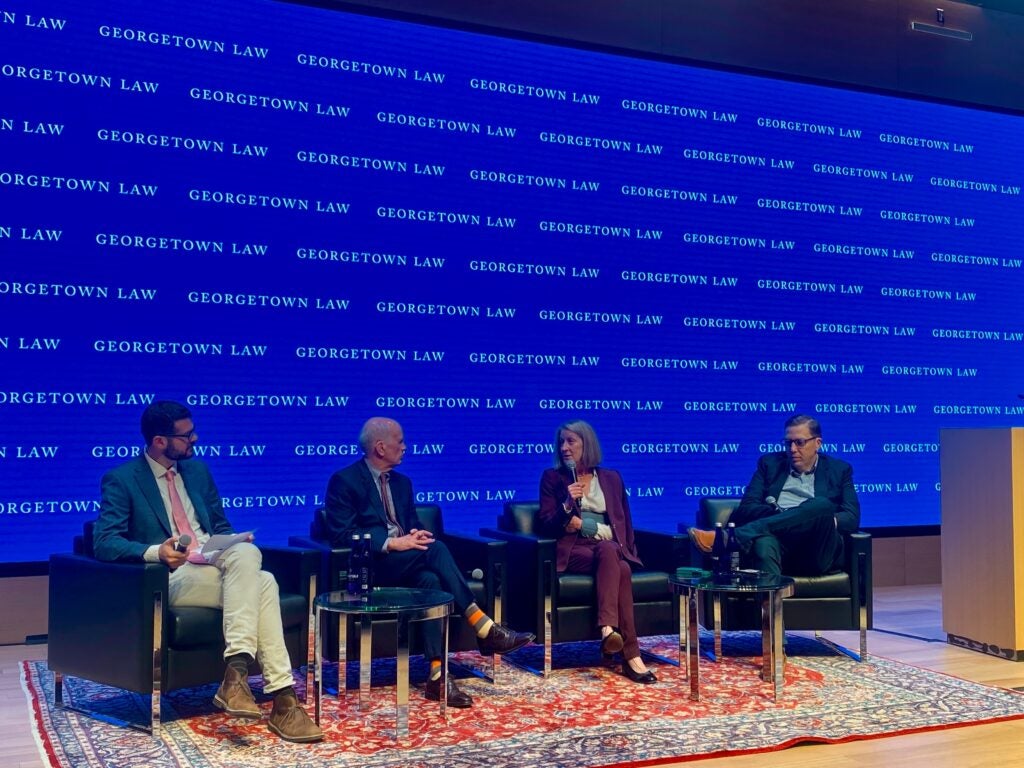
As pictured above, Mary recently joined Professor Steve Vladeck for an important conversation with U.S. Senator Peter Welch about executive power, the rule of law, and whether we are in a constitutional crisis. Mary shed more light on the Trump Administration’s strategy to defy court orders and more in a recent Just Security piece.

Combating extremism and promoting good government
- In February, ICAP Legal Director Rupa Bhattacharyya joined Jon Stewart on The Daily Show! Rupa debunked the myth of government “inefficiency” and offered firsthand experience on how government processes protect the public and enhance quality of life. The full episode can be streamed on Paramount+.
- In the wake of the January 6th pardons issued by the President, ICAP partnered with the Prosecutors Alliance and the Brennan Center to host a virtual webinar on how prosecutors and communities can address political violence. Mary and ICAP Senior Counsel Julia Gegenheimer brought their prosecutorial expertise to the conversation, sharing information for elected officials and legal options for protecting their communities.
- And in our ongoing effort to combat private paramilitaries, in March, Mary testified before Nevada state lawmakers in support of a bill based on ICAP’s model state anti-paramilitary-activity bill.