
newsletter 10/10/25
In Two Courts on One Day (and more)!

Defending the Rights of Children and Immigrants
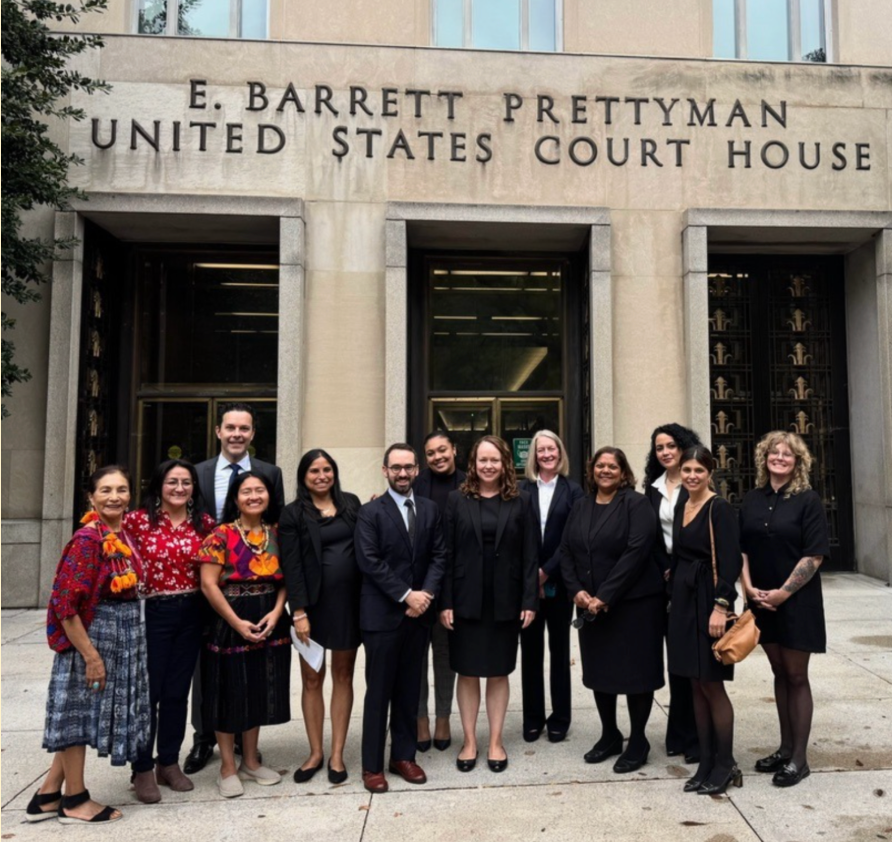
September started off at a sprint for the ICAP attorneys! After DHS attempted to send unaccompanied Guatemalan children back to Guatemala in the middle of the night on Labor Day weekend, resulting in an emergency Temporary Restraining Order, their lawyers at the National Immigration Law Center and the National Center for Youth Law reached out for support and we eagerly joined as co-counsel. A full weekend of briefing later, we successfully obtained a classwide preliminary injunction to prevent the government from deporting unaccompanied Guatemalan children under the guise of family reunification without complying with laws enacted to protect them from trafficking and other abuses. During oral argument on September 10, the government withdrew its claim that the parents of the children it sought to remove had requested that they be returned after we submitted an internal Guatemalan government report showing that none of the parents had made such a request. When granting our motion for a preliminary injunction, the judge warned that the government “should not construe this decision as an invitation to take similar action” with respect to other unaccompanied minors in its custody. Yesterday, we filed an amended complaint seeking to expand the protections of the law to all such children from any country.
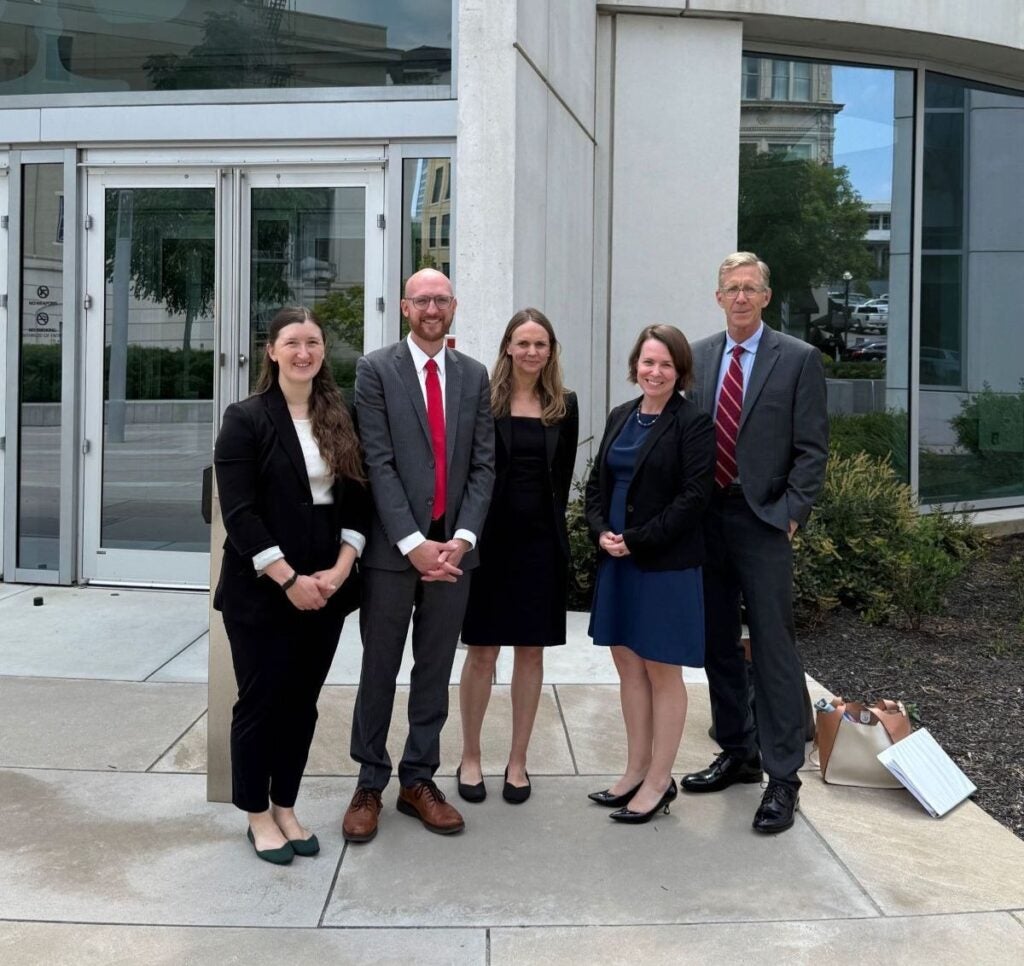
On the same day that ICAP lawyers were arguing in the D.C. District Court on behalf of unaccompanied children, other ICAP lawyers were in federal court in Tennessee seeking to enjoin a newly enacted Tennessee law written so broadly that it could criminalize providing shelter to an undocumented immigrant, even with no intent to conceal, if there is some financial gain. The law could be used to target a landlord who rents to immigrants or a church that provides services to immigrants (like food banks or ESL classes) if the church accepts donations for its work. Representing the Southeastern Synod of the Evangelical Lutheran Church in America, a local landlord, and a Tennessee parent, we argue that the law is unconstitutional because federal immigration enforcement is the responsibility of the federal government, not the state, and the law is too vague to provide notice of what is prohibited.
Defending Civil Rights in the Supreme Court
We’ve also been busy opposing Supreme Court review in a case seeking to overturn the right to same-sex marriage and a case preserving the right to seek asylum at the border. On the same day in October, we filed in both cases:
- In Ermold v. Davis, former Kentucky County Clerk Kim Davis, who refused to grant same-sex marriage licenses after the Supreme Court issued its opinion recognizing the right to same-sex marriage in Obergefell v Hodges, has asked the Supreme Court to overturn the landmark case while also seeking to overturn a jury verdict awarding damages to the couple whose marriage license she refused to issue. Our brief in the Supreme Court opposes her meritless request.
- In Noem v. Al Otro Lado, the United States is seeking review of a Ninth Circuit decision holding that the government violated the law by having border patrol physically block asylum seekers from entering the country at the U.S-Mexico border, preventing them from having their asylum petitions processed. In collaboration with the immigration advocacy groups that initially brought the suit, we filed a brief urging the Supreme Court to deny review because the policy of blocking asylum seekers is no longer in effect and the Ninth Circuit decision was correct in any event.
Educating the Public in Unprecedented Times
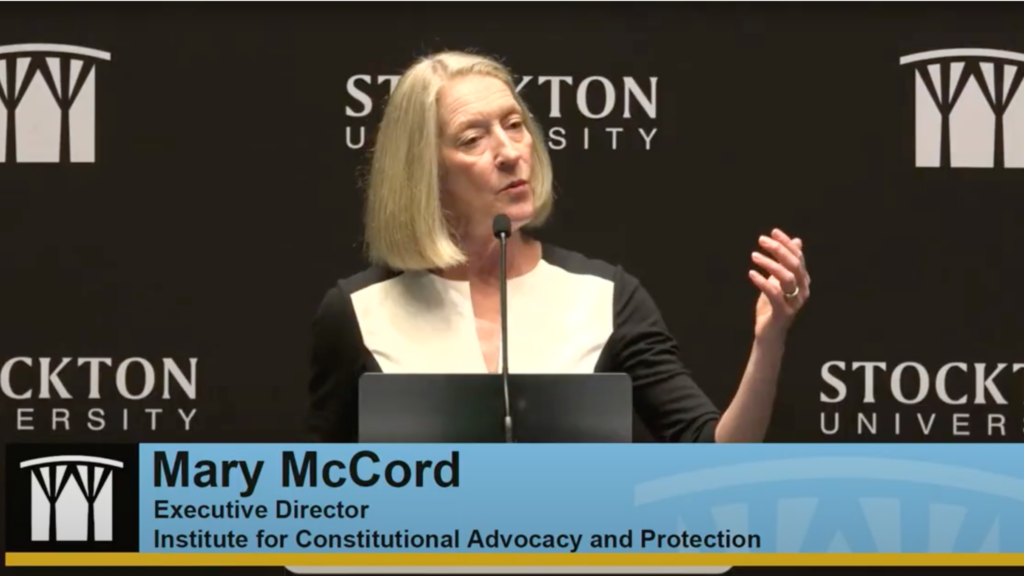
The volume of requests for engagement continues to grow as we navigate unprecedented events on an almost daily basis. In celebration of the 238th Constitution Day, ICAP’s Mary McCord delivered the keynote address at Stockton University’s 19th Annual Constitution Day event. In her address, she explained how executive overreach threatens the rule of law, and why that matters to our constitutional democracy. A few days before, in a conversation with Democracy Docket Founder Marc Elias, Harvard Law Professor Nikolas Bowie, and Congressmember Jamie Raskin, the four experts had a lengthy discussion about voting, the courts, and the ongoing fight for our democracy. The full recording of the event can be found here.
The ICAP team has also been consulting regularly, behind the scenes, with public officials, litigators, and non-profits about the legal limits of the authorities the administration is relying on to federalize and deploy National Guard troops into American cities, as well as the impact of NSPM-7–the recent presidential memorandum directing the executive branch to deploy all available tools to target so-called “domestic terrorist organizations,” despite the lack of any legal authority to make such designations and the threat this poses to First Amendment rights. Among other public appearances on these topics, Mary recently spoke with Chris Hayes on Why is This Happening? about the military deployments, and sat on a panel of the ProPublica event: Counterterrorism in the Trump Era, where she and other extremism and political violence experts spoke about the federal government’s retreat from prior initiatives to counter extremist activity With the rise in political violence across the country, Mary also offered her perspective on the fringe notion of America descending into Civil War in the Atlantic piece, Strawberries in Winter.
In addition to dozens of television appearances, Mary has also been speaking and writing about the legal ramifications of breaking news. For those interested in hearing more about the indictment of former FBI Director James Comey, Mary spoke with both NPR’s 1A and the hosts of Newsgirls to discuss the implications of the prosecution of political enemies and the current role of the Department of Justice. For those following the unlawful strikes on boats in international waters, check out Mary’s recent piece in Just Security that outlined questions for Attorney General Pam Bondi’s Senate Judiciary Committee hearing. And as part of a special edition of Georgetown Law’s Journal of National Security Law and Policy, Mary wrote about why courts should no longer defer to the Executive Branch on matters of national security and foreign policy. For more on all of the above, tune into the podcast Mary co-hosts with Andrew Weissmann: Main Justice, which just today won gold in the Signal awards for podcasts!
Finally, if you’re looking for a light listen, ICAP Supreme Court Director Kelsi Corkran joined the Irish radio show, Talking History, to discuss the life and legacy of Justice Ruth Bader Ginsburg on the 5th anniversary of her death.