No matter the result of the upcoming election, mass demonstrations and unrest may follow, as was the case in 2020. This document provides guidance to law enforcement about how they can protect First Amendment rights while preserving public safety during such demonstrations. Officers should exercise sound judgment based upon the facts of a particular situation. Whenever possible, law enforcement should consult with legal counsel and coordinate with local officials, community groups, and cooperating agencies.
Ensure that the Role of Law Enforcement is Clear and that Any Law Enforcement Response to Mass Demonstrations is Proportionate
The First Amendment guarantees people the right to peaceably assemble and protest, regardless of viewpoint.1
- The First Amendment does not protect violence or unlawful conduct or imminent incitement to violence or unlawful conduct.
- Law enforcement officials may impose reasonable time, place, and manner restrictions that are narrowly tailored to serve the government’s compelling interest in protecting public safety. Any restrictions must not be applied in a manner that discriminates based on viewpoint. Such restrictions could include:o Separating opposing groups and setting up buffer zones;2
- Banning items that can be used as weapons (if permitted by state and local law); and
- Barring private paramilitary activity.3
Law enforcement’s principal role is to facilitate individuals’ First Amendment rights to assemble and express themselves while protecting protesters and public safety.
- Law enforcement leaders should make clear public statements that officers will protect constitutional rights during demonstrations.
- Law enforcement responses to mass gatherings should be measured and proportionate, and officers should take steps to avoid—even inadvertently—heightening tensions and making the situation worse. o
- Law enforcement should tailor their responses to the actions and mood of the gathering, andshould avoid using more force, gear, or equipment than necessary.
- Law enforcement officers’ actions and demeanor affect how they are perceived bydemonstrators. Cooperation with law enforcement depends on officers being perceived as fair, respectful, and restrained in their interactions and responses to crowd activity. Individual officers who are stressed or hostile should be removed from interacting with protesters.
- When forming a barrier line or perimeter, officers should consider alternating the directions that the officers face so they are not perceived as favoring one “side” and not the other.
- All officers should be clearly identified by displaying the insignia of their units and names.
- Officers should be trained to respond to mass demonstrations. Training should include relevant lawsand policies; skills like de-escalation and peer intervention; and the use of any specialized equipment.
Most demonstrations are peaceful, and, even when unlawful activity occurs, law enforcement should be aware that protesters are not homogenous: crowds are often a combination of individuals engaging in lawful and unlawful activities. Police officers should avoid taking mass enforcement actions and instead limit stops, detentions, and arrests to individuals or subgroups engaged in unlawful behavior.
- Officers should clearly communicate the thresholds for arrest and give audible warnings and fair notice to demonstrators when they are violation of the law and subject to arrest. Arrests may only be made where there is probable cause that a crime has been committed.
- Law enforcement may declare an unlawful assembly and order demonstrators to disperse when a group has become violent or poses a clear danger of imminent violence. Loud, boisterous protest activity is not enough to create an unlawful assembly, nor is the commission of crimes by individuals.4
Law Enforcement Agencies Should Not Endorse or Facilitate Private Paramilitary Activity
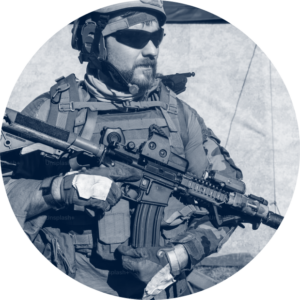
Unauthorized, armed private militia groups have shown up at prior election-related demonstrations purporting to protect persons and property. This activity is unauthorized and unlawful, and the presence of armed groups can inhibit free expression and heighten the risk of serious injury and death.
- All 50 states prohibit private, unauthorized groups from engaging in activities reserved for the state militia, including law enforcement activities.5
- The Second Amendment does not protect private militias. The Supreme Court decided in 1886—and repeated in 2008—that the Second Amendment “does not prevent the prohibition of private paramilitary organizations.”6
- Law enforcement agencies should not coordinate with, encourage, or facilitate the participation or presence of any unlawful armed militia groups. Law enforcement should also make clear to these groups and to the public that unauthorized militias have no authority to engage in law enforcement activities.
What You Can Do Now: Begin Strategic Planning and Communication in Advance of Election Day
Law enforcement should engage in cooperative and strategic advance communication and planning with community stakeholders in order to promote public safety and build mutual trust. Communications should engage members of law enforcement, mutual aid partners, community groups, protest leaders, and event organizers. Law enforcement should:
- Establish positive relationships with community leaders, event organizers, and protest groups through ongoing outreach to help prevent escalation during a demonstration.
- Work with community members to learn about expected participants and potential adversarial groups in a way that is sensitive to concerns about surveillance and other information – gathering techniques.
- Use social media as a tool for real-time outreach and communication.
Law enforcement should establish a clear command structure and set clear expectations for officers, including that they should respect the sanctity of life and protesters’ First Amendment rights. Plansshould include, among other issues:
- Tactical considerations for the use of weaponry and less-lethal munitions, and under what circumstances officers should make arrests;
- Measures to avoid officer fatigue and stress, like providing officers with food, water, protection from weather, and breaks; and
- Plans to divert traffic if streets may be blocked.
Law enforcement should coordinate with other agencies, including emergency services, the fire department, and other law enforcement agencies who may provide mutual aid. Have a written agreement that clarifies mission, supervision, communications, and policies on use of force and arrests. Critical decisions, like when to use force, deploy hard gear, disperse a gathering, or conduct mass arrests should be made by the lead agency.
- See, e.g., Schneider v. State, 308 U.S. 147, 163 (1939); Thornhill v. Alabama, 310 U.S. 88, 101-02 (1940); Police Dep’t of Chicago v. Mosely 408 U.S. 92, 95-96 (1972). ↩︎
- See Institute for Constitutional Advocacy and Protection, Georgetown University Law Center, Protests and Public Safety: A Guide for Cities and Citizens, https://constitutionalprotestguide.org/. ↩︎
- Olivieri v. Ward, 801 F.2d 602, 607 (2d Cir. 1986). ↩︎
- Jones v. Parmley, 465 F.3d 46, 57 (2d Cir. 2006). ↩︎
- Find more information about your state’s anti-paramilitary laws at http://bit.ly/50factsheets. ↩︎
- See Presser v. Illinois, 116 U.S. 252 (1886); District ofColumbia v. Heller, 554 U.S. 570 (2008). ↩︎